The decision cannot be understood from a survey alone.
Reach is not the same as impact. Television can create broad memory, computer placements can capture intent, and highway or city advertising can influence a later visit—but the same person may see several of them. A media plan based on impressions alone can pay repeatedly for the same audience, miss the people most likely to visit, or create demand where restaurants cannot absorb it.
OpenX approach
Turn the decision into a controlled possible world.
OpenX builds city populations with media habits, mobility, household context, food occasions, past purchases, price sensitivity, and restaurant access. Every synthetic person moves through a normal week, encounters campaign variants in context, remembers or ignores them, talks to others, opens the app, changes route, visits, orders, or abandons. McDonald's can compare incremental behavior—not only exposure—from the same starting population.
Channel simulation
Four ways to be seen. One behavior to change.
OpenX follows the same synthetic people across television, computer, highway, and city exposure. It deduplicates reach, measures attention in context, and traces which combinations create an incremental restaurant visit.
San Francisco · New Year world1.24M synthetic people
Every agent has a route, household, media pattern, food occasion, memory, price sensitivity, and realistic access to a restaurant.
Capture active consideration
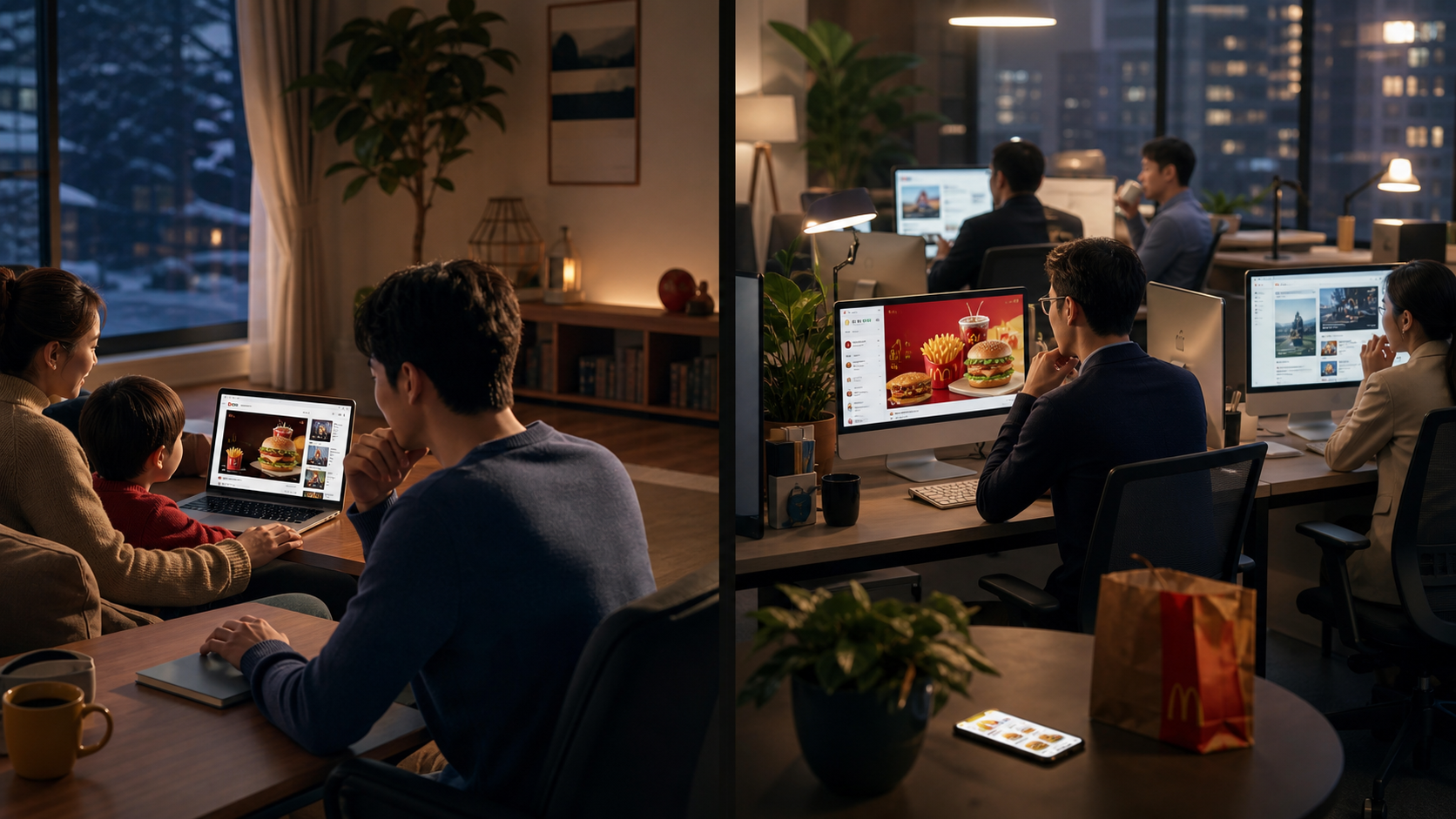
Computer
18.4Kvisits
438K unique reach74% qualified
Highest intent density; weak when repeated after the decision is already made.
Create shared memory
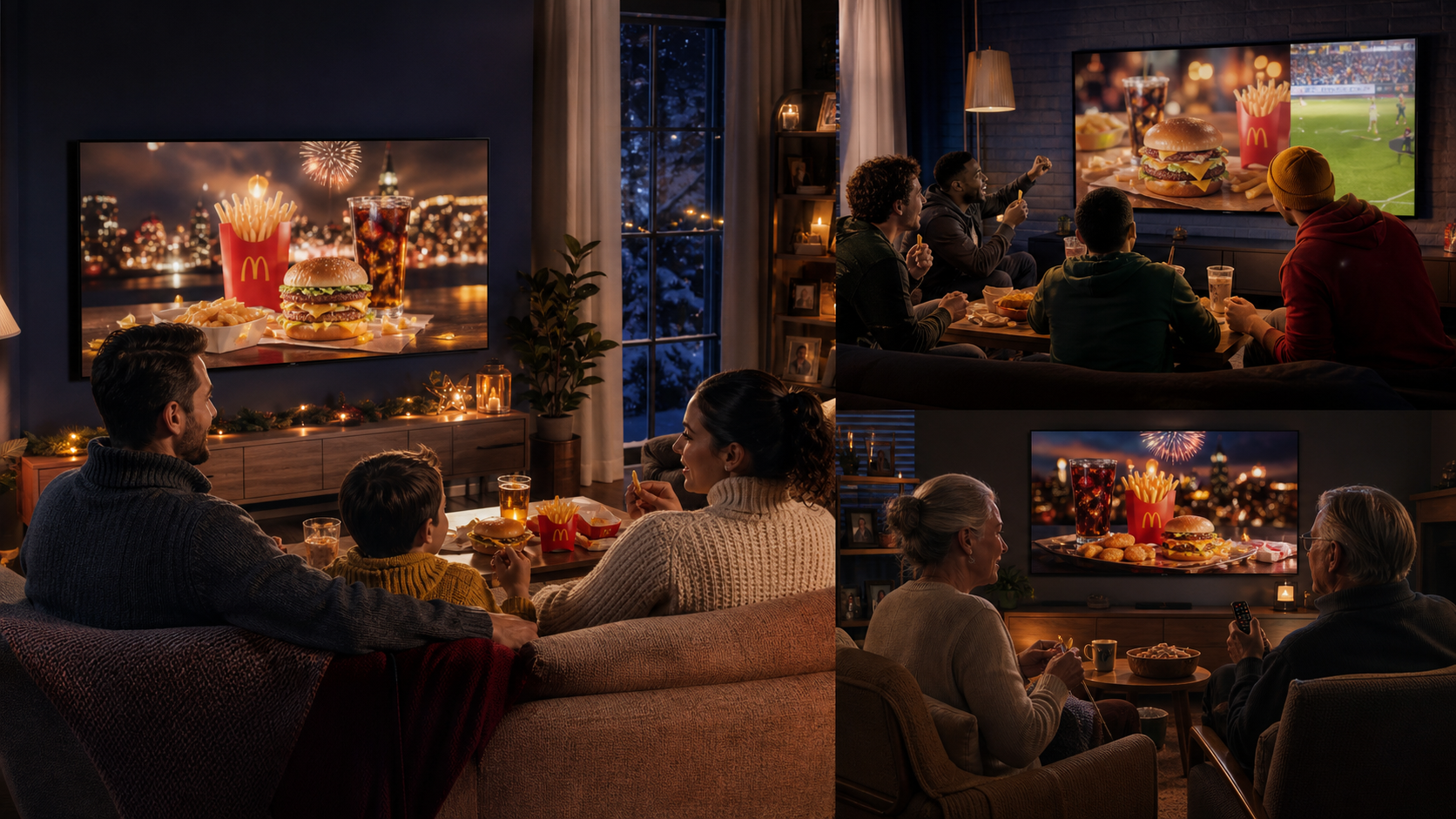
Television
21.6Kvisits
1.08M unique reach51% qualified
Largest unique reach and recall; needs a closer-to-occasion reminder to convert.
Intercept a real journey
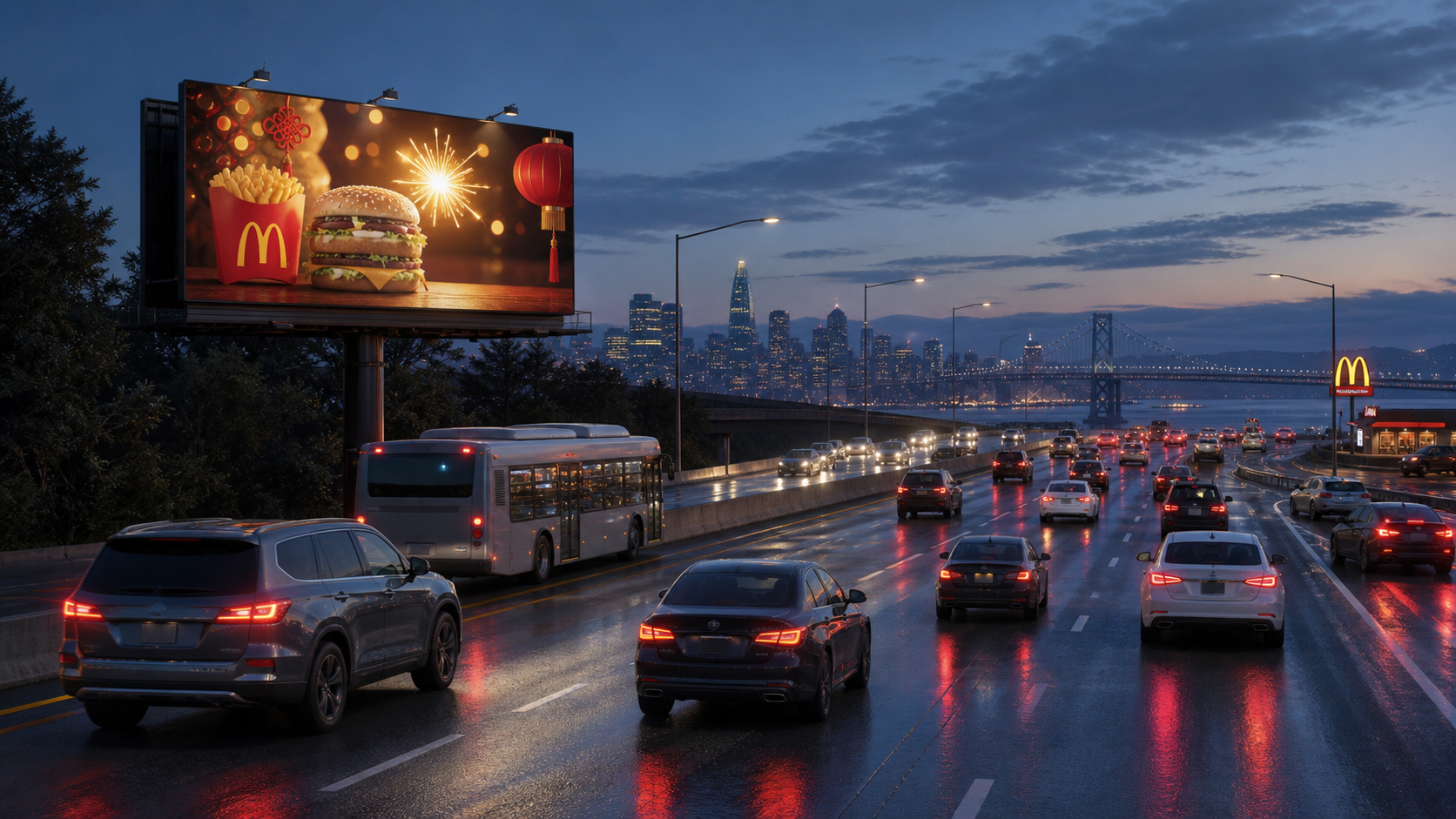
Highway
25.1Kvisits
612K unique reach63% qualified
Strongest lift near an accessible restaurant; performance falls outside useful routes.
Connect occasion to place
City
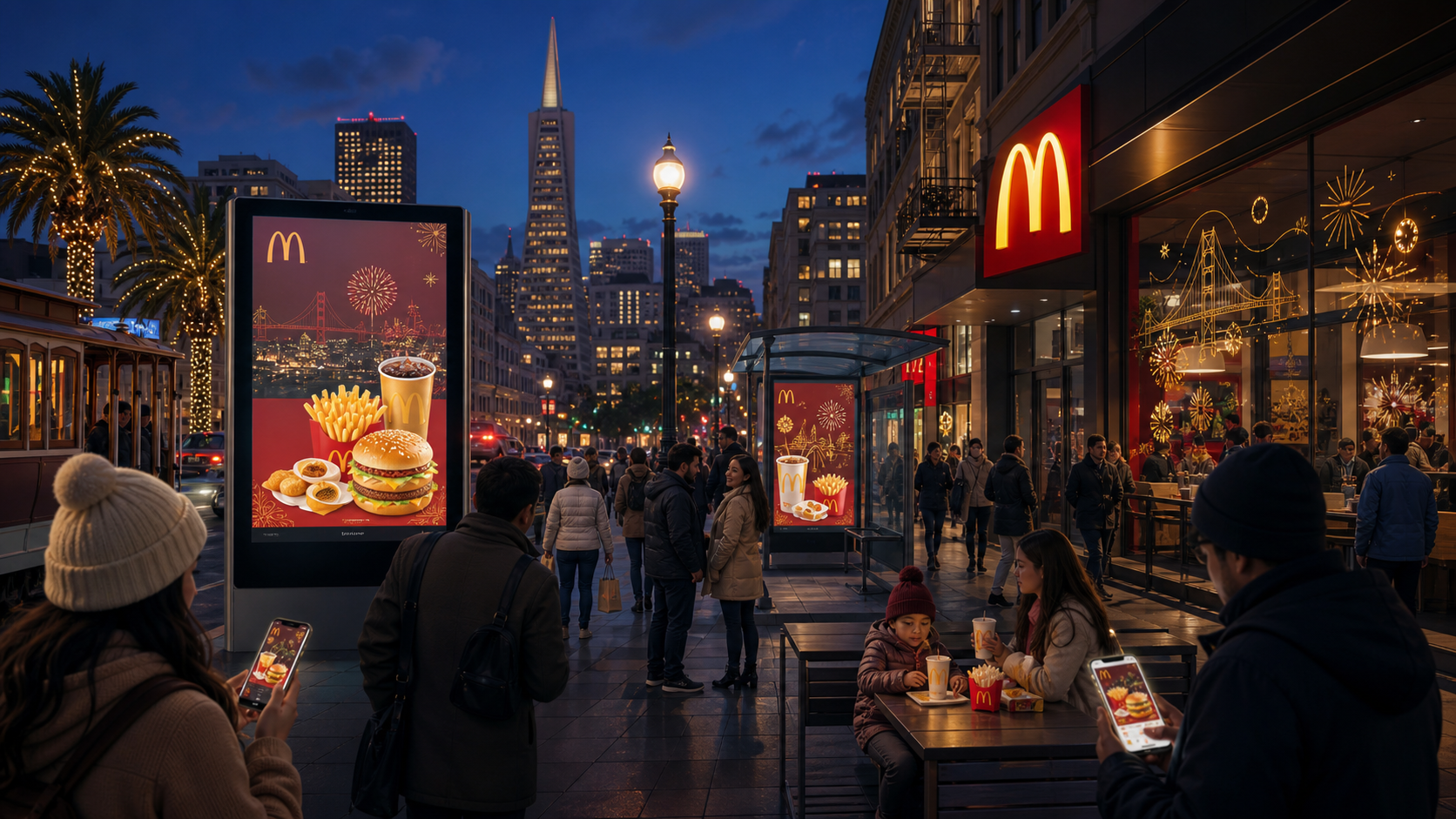
31.4Kvisits
782K unique reach69% qualified
Best qualified reach when commuter, celebration, and restaurant proximity overlap.
San FranciscoJourney-led demand
Commuter routes, Union Square footfall, highway exposure, delivery behavior, and restaurant capacity.
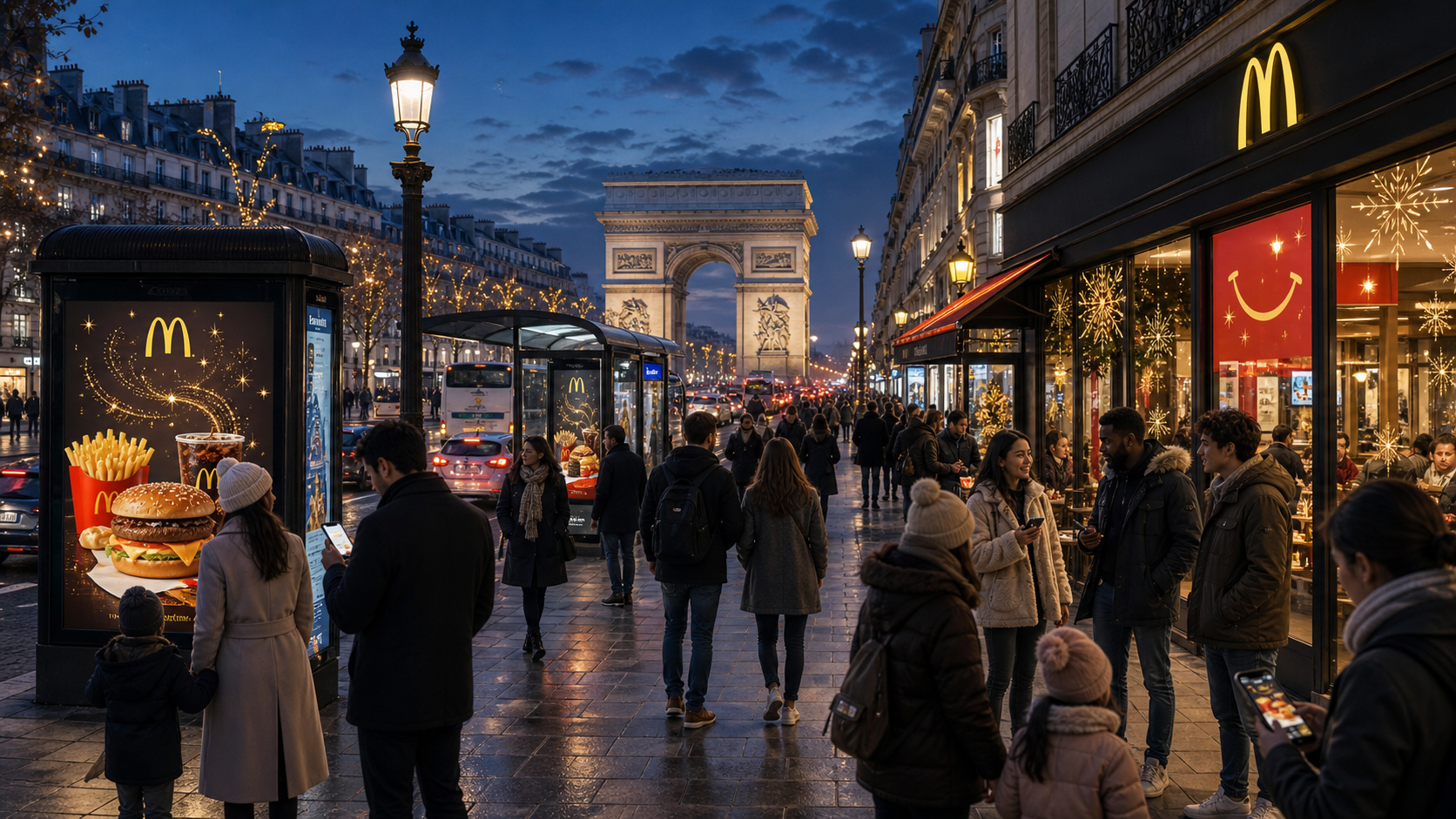
ParisCelebration-led demand
Dense pedestrian flows, transit exposure, tourism, group occasions, and late-evening restaurant choice.
Unique audience journeyDeduplicated across channels
Population modeled1.24M
Unique exposed1.02M
Qualified attention782K
Remembered at occasion314K
Incremental visits46.8K
Reach quality mapEach point = audience cohort
AttentionVisit propensity
TVComputerHighwayCity
Correlation model
See what actually moves a visit.
A high correlation is not treated as causation. OpenX uses the matrix to find sensitive relationships, then reruns counterfactual worlds in which the exposure changes and the person, occasion, and environment remain controlled.
Illustrative model output, not a McDonald's result. Figures show how OpenX presents a decision and would be recalibrated with real media, mobility, app, store-traffic, and transaction evidence.
Example rehearsal
Same starting world. Three possible paths.
Every path uses the same actors, evidence, constraints, and random seeds so the intervention—not a different starting population—explains the change.
1.08M
Broadcast reach
Largest audience, but more low-intent impressions and overlap
438K
Digital intent
Smaller reach, strongest measurable path to app and order
782K
City-to-store mix
Best balance of qualified attention, memory, and incremental visits
What the team learns
Observe the behavior behind the outcome.
QUALIFIED REACH782K
unique people with a plausible occasion, restaurant access, and enough attention to encode the campaign
INCREMENTAL VISITS+12.8%
modeled lift for the balanced mix versus the no-campaign counterfactual
DUPLICATE SPEND−17%
after removing low-value overlap and capping repeated exposure across television and digital
Modeled business impact
What your team could gain.
OpenX does not promise a result. It identifies where a better decision could save time, prevent avoidable spend, and improve forecast precision—then defines the smallest real-world test needed to verify it.
Media planning3–5 weeks
potentially saved by evaluating channel combinations, cities, dayparts, and audience overlap in one controlled world.
Wasted reach12–19%
modeled reduction from removing excessive frequency, weak geographies, and exposure that cannot lead to a visit.
Visit forecast+11–17 pts
potential precision gain after the world is calibrated against observed reach, app events, store traffic, and transaction outcomes.
Illustrative ranges generated for this example scenario. Actual impact depends on evidence quality, calibration, deployment scope, and validation against observed outcomes.
RECOMMENDATION
Use television to establish the New Year memory structure, concentrate city and highway placements around high-opportunity journeys, then trigger a short computer and mobile reminder only for exposed people with a plausible restaurant occasion. Cap cross-channel frequency and stagger local activation to protect restaurant capacity.
SMALLEST REAL-WORLD TEST
Run two matched San Francisco geographies for 14 days: balanced television plus proximity OOH plus digital reminder versus television plus broad digital. Validate unique reach, exposed-versus-control visits, app conversion, average check, and peak wait time.
Illustrative OpenX scenario for McDonald's-type operating conditions. It does not describe a client engagement, partnership, endorsement, or verified company result.
 McDonald's